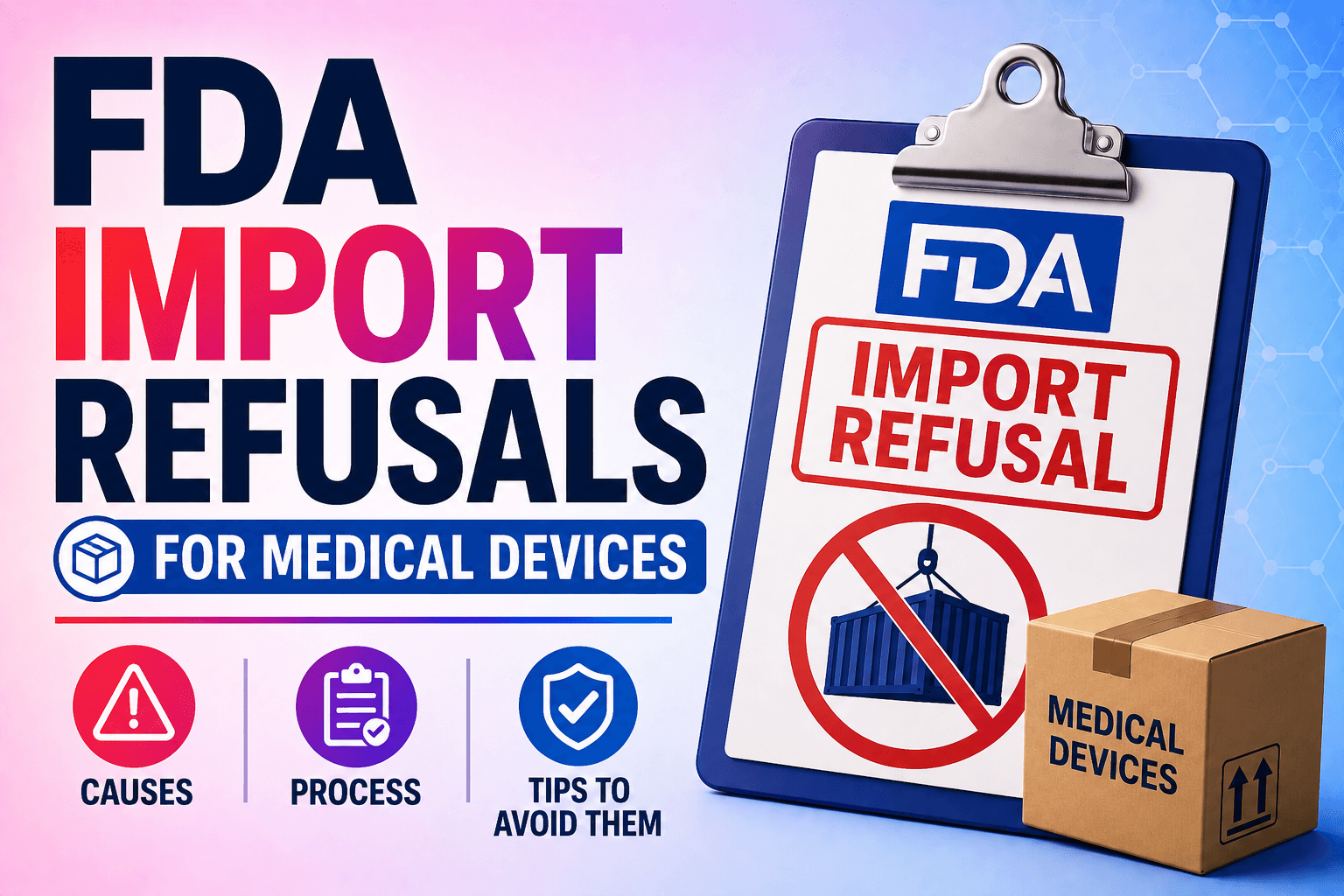
An FDA import refusal is the agency’s final decision that a detained shipment violates FDA laws. Once refused, the shipment must be destroyed or exported within 90 days of the Refusal Notice. Before refusal, FDA issues a Notice of Detention and Hearing with a respond-by date to submit evidence or propose reconditioning. Devices on Import Alert may face DWPE and will be detained unless you overcome the violation.
This guide provides a comprehensive look at the FDA import refusal process, common reasons for refusals, reconditioning options, and best practices to help companies prevent compliance issues and streamline the import process.
What is an FDA Import Refusal?
An FDA import refusal occurs when a product entering the U.S. fails to meet FDA standards for safety, quality, labeling, or documentation. The FDA inspects imported goods and, if an issue is detected, issues a Notice of Action detailing the reason for the refusal. Products facing import refusals can be detained, preventing them from entering the U.S. market until compliance is achieved.
Common Reasons for FDA Import Refusals for Medical Devices
Understanding why import refusals occur can help companies prepare for compliance. The most common reasons include issues with labeling, quality, and documentation.
- Incomplete Intended Use Information: If a medical device lacks clear instructions or intended use on its label, it may be flagged as non-compliant.
- Missing Manufacturer Details: FDA regulations require all relevant manufacturer information to appear on the product label. Missing details can prompt a refusal.
Non-Compliance with Labeling Requirements
Ensuring labels meet FDA guidelines before import can prevent these issues.
- Contaminated or Unsterilized Products: Devices that enter the U.S. without proper sterilization records may be detained. For instance, surgical instruments must be certified as sterile and free from contamination.
- Incomplete Quality Assurance Testing: Devices must meet rigorous quality standards. If a device lacks evidence of meeting these standards, the FDA may refuse entry.
Product Quality and Safety Concerns
Quality control measures and adherence to GMP standards are essential for compliance.
- Missing Certificates of Compliance: Certain devices must include certificates proving they meet FDA standards.
- Outdated Inspection Records: The FDA may require recent inspection reports, especially for high-risk devices.
Lack of Required Documentation
Ensuring all documentation is accurate and up-to-date before import can reduce the likelihood of refusals.
Understanding the FDA Import Refusal Process
The FDA import refusal process includes several key stages, beginning with the inspection and concluding with potential reconditioning or re-exporting. Here’s a breakdown of each step:
- Initial Inspection: When a product arrives at a U.S. port, the FDA inspects it for labeling accuracy, documentation, and quality compliance.
- Notice of Action: If issues are detected, the FDA issues a Notice of Action identifying the specific non-compliance concerns. This notice includes reasons for refusal and required corrective actions.
- Detention: Products are detained, preventing their sale or distribution within the U.S. until compliance is demonstrated.
- Resolution Options: Companies can recondition, re-export, or destroy the product if compliance cannot be achieved. Products with minor issues may qualify for reconditioning, allowing for corrective actions to bring the product into compliance.
Reconditioning Options for Refused Medical Device Imports
Reconditioning offers a path forward for some non-compliant products, allowing companies to correct issues and bring products into compliance. Here’s how the process works:
- Relabeling: Updating the product’s labeling to meet FDA standards.
- Additional Testing: Conducting necessary quality assurance or sterilization tests.
- Facility Improvements: Adjusting manufacturing practices if the initial issues stem from GMP non-compliance.
Types of Reconditioning Actions
- Submitting a Reconditioning Plan To recondition a refused product, companies must submit a detailed reconditioning plan to the FDA. This plan outlines the proposed corrective actions and provides supporting documentation, including quality tests, certificates, and any new labels. Once approved, reconditioned products may be allowed entry into the U.S..
Submitting a Reconditioning Plan
Key Steps for Avoiding FDA Import Refusals
Proactive compliance measures are essential for avoiding FDA import refusals. Here’s how to improve your chances of smooth market entry:
- Ensuring Compliance with Labeling and Documentation Requirements Check labeling and documentation thoroughly before import to ensure compliance with FDA standards. Keep up-to-date with changes in labeling requirements, particularly for high-risk devices or new market entries.
- Conducting Quality Control Checks Regular quality control and GMP adherence are essential for FDA compliance. Conduct routine testing and audits to ensure devices meet FDA’s quality standards. For example, companies importing surgical devices should perform batch testing to confirm sterility before import.
- Staying Informed of FDA Regulations FDA standards can change, especially as new technologies and device categories emerge. Staying informed ensures compliance with current regulations, reducing the risk of import refusals. For companies importing frequently, regular checks for updates on the FDA website or using compliance software like Complizen can be highly beneficial.
Ensuring Compliance with Labeling and Documentation Requirements
Conducting Quality Control Checks
Staying Informed of FDA Regulations
The Fastest Path to Market
No more guesswork. Move from research to a defendable FDA strategy, faster. Backed by FDA sources. Teams report 12 hours saved weekly.
- FDA Product Code Finder, find your code in minutes.
- 510(k) Predicate Intelligence, see likely predicates with 510(k) links.
- Risk and Recalls, scan MAUDE and recall patterns.
- FDA Tests and Standards, map required tests from your code.
- Regulatory Strategy Workspace, pull it into a defendable plan.
👉 Start free at complizen.ai
Webinar: Dive Deeper into FDA Import Refusals
For a more detailed understanding of FDA import refusals, reconditioning options, and strategies for avoiding compliance issues, join our upcoming FDA Import Refusal Webinar. This session will cover best practices for managing import compliance and preventing costly refusals. For more information you can reach out to us here.
Conclusion
FDA import refusals pose significant challenges for medical device companies, from delays to potential re-exportation. By understanding the refusal process, proactively managing compliance, and preparing for regulatory requirements, companies can avoid these costly interruptions. Ensuring accurate labeling, quality control, and complete documentation is critical to preventing refusals and securing smooth market access.
With these best practices in place, medical device companies can minimize import refusals, meet FDA standards, and maintain a reputation for regulatory excellence.
The Fastest Path to Market
FAQs
1. What is an FDA import refusal?
An FDA import refusal occurs when a product entering the U.S. does not meet FDA standards for labeling, safety, or documentation, preventing it from entering the market.
2. How does the FDA decide to refuse a product?
The FDA inspects imported products for compliance with labeling, documentation, and quality standards. Non-compliant products are flagged, leading to a Notice of Action and potential detention.
3. Can refused products be reconditioned?
Yes, in some cases. Reconditioning involves corrective actions like relabeling or quality testing, and requires submitting a reconditioning plan to the FDA for approval.
4. What is a reconditioning plan?
A reconditioning plan details corrective actions to bring a product into compliance with FDA standards, allowing it to be released into the U.S. market upon approval.
5. How can companies avoid FDA import refusals?
Ensure thorough labeling, accurate documentation, and compliance with FDA quality standards. Regular quality checks and staying informed of FDA regulations are essential for compliance.