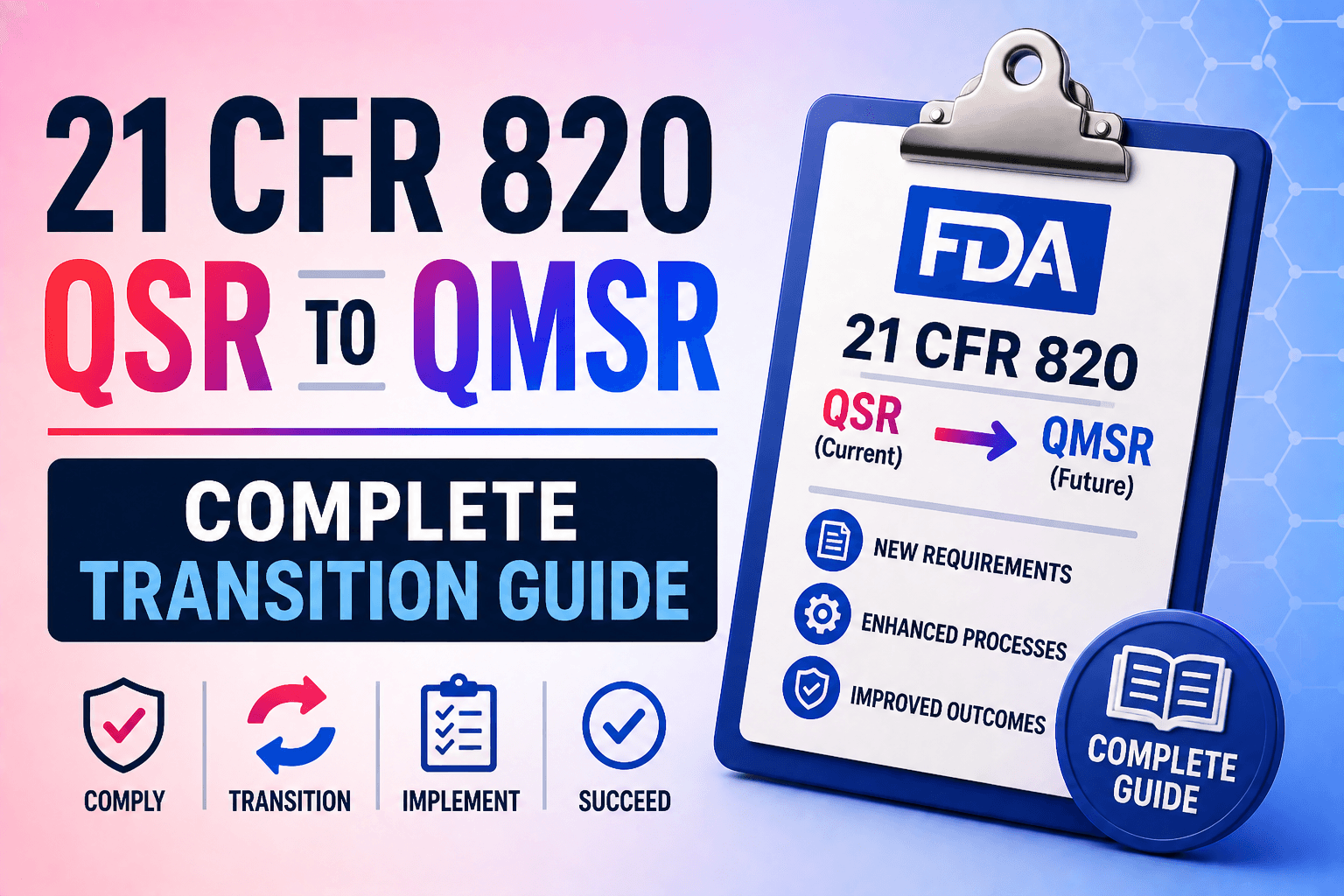
FDA is replacing 21 CFR 820 (Quality System Regulation) with the Quality Management System Regulation (QMSR) on February 2, 2026, incorporating ISO 13485:2016 by reference and adding a few FDA-specific clarifications (e.g., definitions, records/labeling expectations). Until then, manufacturers must comply with the current QS regulation while preparing for QMSR alignment. QMSR also incorporates Clause 3 of ISO 9000:2015 and adds FDA-specific clarifications to avoid conflicts with other requirements.
This comprehensive guide provides medical device manufacturers with everything needed to understand current 21 CFR 820 requirements, prepare for the 2026 QMSR transition, and maintain compliance throughout the regulatory transformation.
The Historic QSR to QMSR Transformation
On January 31, 2024, the FDA issued a final rule amending the device current good manufacturing practice (CGMP) requirements of the Quality System (QS) Regulation under 21 CFR 820 to align more closely with the international consensus standard for Quality Management Systems for medical devices used by many other regulatory authorities around the world.
What's Changing and When
Current State (Until February 2, 2026):
- 21 CFR 820 Quality System Regulation remains in effect
- Manufacturers must comply with existing QSR requirements
- FDA continues current inspection and enforcement approach
- No immediate changes to current compliance obligations
Future State (February 2, 2026 and Beyond):
- New Quality Management System Regulation (QMSR) takes effect
- ISO 13485:2016 incorporated by reference into US regulations
- Harmonized international approach to quality management
- Enhanced alignment with global regulatory frameworks
Why This Change Matters: This action will harmonize the FDA's CGMP regulatory framework with that used by other regulatory authorities, promoting consistency in device regulation and providing timelier introduction of safe, effective, high-quality devices for patients.
Key Benefits of QMSR Transition
For Manufacturers:
- Simplified compliance for companies operating globally
- Reduced regulatory burden through harmonized requirements
- Enhanced clarity through international consensus standards
- Improved efficiency in quality system implementation
For Patients:
- Faster access to innovative medical devices
- Enhanced device quality through proven international standards
- Improved safety through comprehensive quality management
- Better post-market surveillance and device improvement
For FDA and Global Regulators:
- Consistent regulatory approach across jurisdictions
- Reduced regulatory duplication and complexity
- Enhanced collaboration between regulatory authorities
- Streamlined inspection and audit processes
Understanding Current 21 CFR 820 Requirements
While preparing for 2026 transition, manufacturers must maintain full compliance with current Quality System Regulation requirements.
QSR Structure and Organization
Subpart A - General Provisions:
- Scope and definitions of QSR requirements
- Applicability to device manufacturers and importers
- Exceptions and exemptions from QSR requirements
- Foreign manufacturer compliance obligations
Subpart B - Quality System Requirements:
- Management responsibility and quality policy
- Organization structure and personnel qualification
- Quality planning and quality manual requirements
- Management review and quality audit obligations
Subpart C - Design Controls:
- Design and development planning requirements
- Design input, output, and review procedures
- Design verification and validation protocols
- Design transfer and change control processes
Most Frequently Cited QSR Violations
Understanding common FDA citations helps prioritize compliance efforts:
Document Control (§820.40):
- 1,556 citations issued between 2008-2025
- Common issues: inadequate document control procedures
- Prevention: establish robust document management systems
- Focus areas: version control, change management, distribution
Management Reviews (§820.20):
- Over 1,070 citations for inadequate management reviews
- Common issues: insufficient review frequency and documentation
- Prevention: implement systematic management review procedures
- Focus areas: quality metrics, corrective actions, resource allocation
Purchasing Controls (§820.50):
- 3,011 citations between 2008-2025
- Common issues: inadequate supplier evaluation procedures
- Prevention: comprehensive supplier qualification programs
- Focus areas: incoming inspection, supplier audits, performance monitoring
Design Controls (§820.30):
- Consistently high citation rates for design control deficiencies
- Common issues: inadequate design verification and validation
- Prevention: robust design control implementation
- Focus areas: design planning, review, and transfer processes
Current Compliance Strategies
Quality System Documentation:
- Maintain comprehensive quality manual and procedures
- Ensure document control and change management compliance
- Implement effective training and competency programs
- Establish robust corrective and preventive action systems
Design Control Implementation:
- Follow systematic design and development processes
- Conduct thorough design verification and validation
- Maintain complete design history files
- Implement effective design change control procedures
Production and Process Controls:
- Establish validated manufacturing processes
- Implement comprehensive process monitoring and control
- Maintain equipment calibration and maintenance programs
- Ensure adequate facility and environmental controls
ISO 13485:2016 Integration and QMSR Requirements
The QMSR incorporates ISO 13485:2016 by reference while maintaining FDA-specific requirements essential for compliance with the Federal Food, Drug, and Cosmetic Act.
ISO 13485:2016 Framework
Quality Management System Approach:
ISO 13485:2016 establishes a process-based quality management system specifically designed for medical device organizations:
- Context of the organization and stakeholder needs
- Leadership commitment and quality policy establishment
- Risk-based thinking throughout quality management
- Process approach to quality system implementation
Key ISO 13485 Requirements:
- Management system documentation and control
- Management responsibility and resource management
- Product realization through controlled processes
- Measurement, analysis, and improvement activities
QMSR-Specific Additions
FDA-Specific Requirements Maintained:
The QMSR includes additional requirements that clarify certain expectations and concepts used in ISO 13485, ensuring no inconsistencies with other applicable FDA requirements:
- Medical device reporting (MDR) integration
- FDA inspection and enforcement authority
- Specific documentation and record-keeping requirements
- US-specific regulatory submission obligations
Enhanced Requirements:
- Stronger emphasis on risk management integration
- Enhanced post-market surveillance obligations
- Improved supplier management and control requirements
- Clarified design control and validation expectations
Harmonization Benefits
Global Consistency:
- Alignment with international regulatory approaches
- Reduced compliance burden for multinational companies
- Enhanced mutual recognition opportunities
- Streamlined global device approval processes
Industry Efficiency:
- Reduced duplicate quality system requirements
- Enhanced clarity through proven international standards
- Improved resource allocation and cost effectiveness
- Better integration with global supply chains
QMSR Transition Timeline and Implementation Strategy
Phase 1: Assessment and Planning (2025)
Current State Analysis:
- Conduct comprehensive gap analysis between current QSR and ISO 13485
- Identify specific areas requiring system updates or enhancements
- Assess resource requirements for transition implementation
- Develop detailed transition timeline and budget
Strategic Planning:
- Establish QMSR transition team with defined roles and responsibilities
- Create detailed project plan with milestones and deliverables
- Allocate necessary resources for system updates and training
- Engage with regulatory consultants and ISO 13485 experts as needed
Phase 2: System Development (Early to Mid-2025)
Documentation Updates:
- Revise quality manual to align with ISO 13485 structure
- Update procedures to incorporate ISO 13485 requirements
- Develop new procedures for requirements not in current QSR
- Establish document control processes for transition management
Process Implementation:
- Implement enhanced risk management integration
- Establish improved management review processes
- Develop comprehensive competency management programs
- Create robust supplier management and evaluation systems
Phase 3: Validation and Testing (Late 2025)
System Validation:
- Conduct internal audits against ISO 13485 requirements
- Test new procedures and processes for effectiveness
- Validate documentation and record-keeping systems
- Assess personnel competency and training effectiveness
Continuous Improvement:
- Implement feedback mechanisms for system optimization
- Address gaps identified through validation activities
- Refine procedures based on practical implementation experience
- Prepare for potential FDA inspection under QMSR framework
Phase 4: Implementation and Compliance (Early 2026)
Final Transition:
- Complete all system updates and procedure implementations
- Ensure full personnel training and competency validation
- Conduct final internal audit and management review
- Prepare for ongoing compliance monitoring and improvement
Ongoing Compliance:
- Maintain surveillance of QMSR compliance requirements
- Monitor FDA guidance and industry best practices
- Implement continuous improvement based on performance data
- Prepare for FDA inspections under new QMSR framework
Key Differences Between QSR and QMSR
Understanding specific differences helps prioritize transition efforts:
Enhanced Risk ManagementIntegration
Current QSR Approach:
- Risk management referenced but not comprehensively integrated
- Limited connection between risk management and quality processes
- Focus primarily on design and development risk considerations
QMSR Enhancement:
- Risk-based thinking integrated throughout quality management system
- Comprehensive risk management per ISO 14971 requirements
- Enhanced post-market surveillance and risk monitoring
- Stronger connection between risk management and business processes
Improved Management SystemStructure
Current QSR Structure:
- Traditional quality system approach with defined subparts
- Management responsibility focus on policy and organization
- Limited emphasis on stakeholder needs and context
QMSR Structure:
- Process-based approach aligned with ISO 13485 framework
- Enhanced leadership requirements and stakeholder focus
- Comprehensive context analysis and quality planning
- Improved integration of support processes and resources
Enhanced Supplier Management
Current QSR Requirements:
- Basic supplier evaluation and purchasing controls
- Focus on incoming inspection and supplier approval
- Limited ongoing supplier performance monitoring
QMSR Enhancements:
- Comprehensive supplier lifecycle management
- Enhanced supplier qualification and ongoing evaluation
- Improved supplier risk assessment and mitigation
- Stronger supplier audit and performance monitoring requirements
Common Implementation Challenges and Solutions
Challenge 1: Resource Allocation and Timeline Management
Problem: Limited resources and tight timeline for QMSR transition
Solution: Phased implementation approach with prioritized activities
Best Practice: Early engagement with ISO 13485 experts and systematic project management
Challenge 2: Personnel Training and Competency
Problem: Staff unfamiliar with ISO 13485 requirements and approach
Solution: Comprehensive training program with competency validation
Best Practice: Combination of formal training, mentoring, and practical application
Challenge 3: Documentation and System Integration
Problem: Extensive documentation updates and system integration requirements
Solution: Systematic documentation review and update process
Best Practice: Use of document management systems and change control procedures
Challenge 4: Maintaining Current Compliance During Transition
Problem: Risk of current QSR compliance issues while preparing for QMSR
Solution: Parallel compliance approach maintaining current requirements
Best Practice: Regular monitoring and audit to ensure ongoing compliance
FDA Inspection Considerations
Current QSR InspectionApproach
Inspection Focus Areas:
- Quality system implementation and effectiveness
- Design control compliance and documentation
- Manufacturing process control and validation
- Corrective and preventive action system effectiveness
Common Inspection Findings:
- Inadequate management reviews and quality planning
- Insufficient design verification and validation
- Poor supplier evaluation and purchasing controls
- Ineffective corrective and preventive action systems
QMSR Inspection Expectations
Enhanced Inspection Areas:
- Risk-based approach to quality management
- Process effectiveness and continuous improvement
- Stakeholder needs analysis and context consideration
- Integration of support processes and resource management
Preparation Strategies:
- Maintain comprehensive quality system documentation
- Demonstrate effective risk management integration
- Show evidence of continuous improvement and monitoring
- Prepare staff for ISO 13485-based inspection approach
Global Regulatory Alignment Benefits
International Harmonization
Regulatory Consistency:
The QMSR aligns US requirements with international approaches used by:
- European Union (ISO 13485 required for CE marking)
- Health Canada (ISO 13485 incorporated into regulations)
- Japan PMDA (recognizes ISO 13485 compliance)
- Australia TGA (requires ISO 13485 for device registration)
Business Benefits:
- Reduced compliance costs for global manufacturers
- Simplified quality system management across markets
- Enhanced mutual recognition opportunities
- Streamlined global device approval processes
Supply Chain Integration
Global Supply Chain Benefits:
- Consistent supplier qualification requirements
- Harmonized audit and assessment approaches
- Reduced regulatory complexity for component suppliers
- Enhanced quality and efficiency throughout supply chain
Technology and Tools for QMSR Compliance
Electronic Quality Management Systems
System Requirements:
- Document control and management capabilities
- Process workflow and approval automation
- Training management and competency tracking
- Audit and corrective action management
- Risk management integration and monitoring
Selection Criteria:
- ISO 13485 compliance support and templates
- Integration with existing business systems
- Scalability and flexibility for growth
- Regulatory reporting and analytics capabilities
- User-friendly interface and training support
Compliance Monitoring Tools
Performance Monitoring:
- Quality metrics dashboard and trending
- Risk monitoring and assessment tools
- Supplier performance tracking systems
- Customer feedback and complaint management
- Internal audit and assessment tools
Strategic Business Implications
Competitive Advantages
Market Access Benefits:
- Faster global market entry through harmonized compliance
- Reduced regulatory barriers and submission complexity
- Enhanced customer confidence through international standards
- Improved operational efficiency and cost management
Operational Excellence:
- Streamlined quality processes and reduced duplication
- Enhanced risk management and decision-making
- Improved supplier relationships and supply chain efficiency
- Better resource allocation and performance optimization
Investment Considerations
Implementation Costs:
- System updates and technology investments
- Personnel training and competency development
- Consultant and expert support services
- Documentation and process development efforts
Return on Investment:
- Reduced compliance costs for global operations
- Faster product development and market access
- Improved quality performance and customer satisfaction
- Enhanced operational efficiency and resource utilization
Strategic Takeaways
The QMSR represents a paradigm shift toward international harmonization and enhanced quality management. Organizations that proactively prepare for this transition will gain significant competitive advantages through improved operational efficiency, reduced compliance burden, and enhanced global market access.
Success in the QMSR transition requires strategic planning, systematic implementation, and ongoing commitment to quality excellence. Companies that embrace this change as an opportunity rather than a burden will lead the industry in quality management and regulatory compliance.
The Fastest Path to Market
No more guesswork. Move from research to a defendable FDA strategy, faster. Backed by FDA sources. Teams report 12 hours saved weekly.
Frequently Asked Questions
Do companies need to implement ISO 13485 before February 2026?
While not required before 2026, early implementation helps ensure smooth transition and provides immediate benefits for global market access.
Will FDA inspection approaches change under QMSR?
Yes, FDA inspections will likely incorporate ISO 13485 assessment approaches while maintaining FDA-specific requirements and enforcement authority.
Can companies continue using current QSR procedures after 2026?
Current procedures must be updated to comply with QMSR requirements, though many existing procedures may need only minor modifications.
How does QMSR affect medical device software requirements?
Software quality requirements will be enhanced through ISO 13485 integration while maintaining current FDA software validation expectations.
What happens to existing quality system certifications?
Existing ISO 13485 certifications remain valid and provide significant advantage for QMSR compliance preparation.