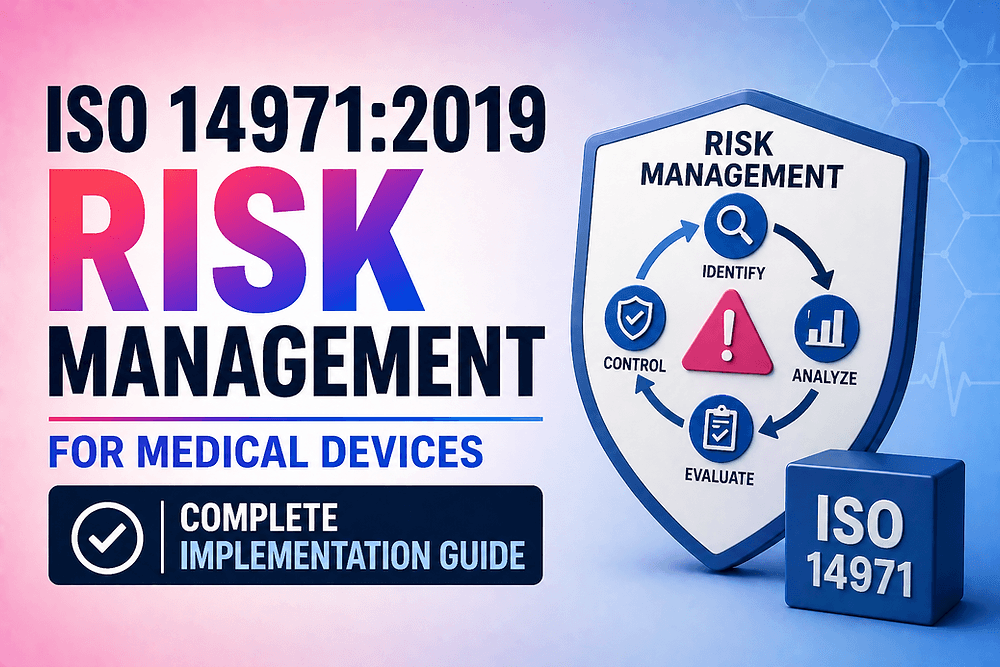
ISO 14971:2019 is the international standard that defines the lifecycle risk-management process for medical devices (including SaMD): identify hazards, estimate/evaluate risk, implement/verify risk controls, and monitor production & post-production information to keep risks under control. Use ISO/TR 24971:2020 for practical methods and documentation tips; FDA aligns through ISO 13485/QMSR and recommends ISO 14971 in software submissions.
This comprehensive guide provides medical device manufacturers with practical implementation strategies, ensuring regulatory compliance while improving product safety and development efficiency.
ISO 14971:2019 vs 2007: Critical Changes You Must Know
The 2019 edition introduced fundamental changes that many manufacturers still haven't fully implemented:
Major Structural Changes
New Chapter Organization:
- Grew from 9 to 10 main clauses
- Enhanced clarity in risk management process steps
- Improved alignment with ISO 13485 requirements
- Better integration guidance for quality management systems
Benefit-Risk Analysis Introduction: The 2019 standard introduces the concept of medical benefit and requires manufacturers to perform benefit-risk analysis when risks cannot be reduced to acceptable levels through design or protective measures.
Key Definition - Medical Benefit: "Positive impact or desirable outcome of the use of a medical device on the health of an individual, or a positive impact on patient management or public health."
Enhanced Post-MarketRequirements
Continuous Monitoring Obligations:
- Systematic collection and analysis of post-market data
- Regular review of risk management activities
- Updated risk assessments based on field experience
- Documentation of risk management effectiveness
Information Sources for Post-Market Surveillance:
- Customer complaints and feedback
- Field corrective actions and recalls
- Clinical data and adverse events
- Manufacturing and quality data
- Regulatory reporting requirements
Risk Control Hierarchy Clarification
Updated Risk Control Measures (in priority order):
- Inherent safety by design - Eliminate hazards through design
- Protective measures - Reduce risks through safety systems
- Information for safety - Warnings, training, and instructions
This hierarchy emphasizes that information alone cannot adequately control high-severity risks.
ISO 14971 Implementation Framework: Step-by-Step Process
ISO 14971 serves as the cornerstone of medical device safety management globally. Risk management is a regulatory requirement—without performing risk management and meeting the requirements of ISO 14971, the doors to most major medical device markets worldwide, including the US and EU, are closed.
The standard defines risk as "the combination of the probability of occurrence of harm and the severity of that harm," focusing specifically on patient safety rather than business risks. It covers all medical device types, including Software as a Medical Device (SaMD) and in vitro diagnostic (IVD) devices.
Phase 1: Risk Management Planning (Weeks 1-2)
1.1 Establish Risk Management Policy
- Define organizational commitment to risk management
- Assign competent personnel and resources
- Establish risk acceptability criteria
- Create risk management procedures
1.2 Risk Management Plan Development
- Identify applicable standards and regulations
- Define device intended use and reasonably foreseeable misuse
- Establish risk management activities and timelines
- Create risk management file structure
1.3 Risk Acceptability Criteria
Organizations must establish objective criteria for determining acceptable risk levels. The standard doesn't specify acceptable risk levels—manufacturers must define these based on:
- Device classification and intended use
- State-of-the-art practices for similar devices
- Regulatory requirements and guidance
- Clinical evidence and literature
Phase 2: Risk Analysis (Weeks 3-6)
2.1 Hazard Identification Systematic identification of potential hazards associated with the device:
Common Medical Device Hazards:
- Biological hazards: Biocompatibility, infection, toxicity
- Chemical hazards: Material toxicity, degradation products
- Physical hazards: Mechanical failure, sharp edges, entrapment
- Electrical hazards: Shock, burns, electromagnetic interference
- Thermal hazards: Excessive heat, cold injury
- Radiation hazards: Ionizing and non-ionizing radiation
2.2 Risk Estimation For each identified hazard, estimate:
- Probability of occurrence: How likely is the hazardous situation?
- Severity of harm: What are the potential consequences?
- Risk level: Combination of probability and severity
Risk Estimation Methods:
- Qualitative assessment (Low, Medium, High)
- Semi-quantitative scoring (1-5 scales)
- Quantitative analysis (when data available)
- Fault tree analysis for complex systems
- Failure mode and effects analysis (FMEA)
Phase 3: Risk Evaluation (Weeks 7-8)
3.1 Risk Acceptability Assessment
Compare estimated risks against predetermined acceptability criteria:
- Broadly acceptable: Risks requiring no further action
- Tolerable: Risks requiring risk control measures
- Unacceptable: Risks requiring immediate action before use
3.2 Risk Control Decision Making
For risks that aren't broadly acceptable:
- Apply risk control measures according to hierarchy
- Perform benefit-risk analysis if risks remain high
- Document rationale for risk acceptability decisions
Phase 4: Risk Control (Weeks 9-12)
4.1 Risk Control Measure Implementation
Apply control measures following the established hierarchy:
- Use biocompatible materials
- Implement fail-safe mechanisms
- Design connectors that prevent misconnection
- Eliminate sharp edges and pinch points
- Install safety interlocks and alarms
- Implement software safety features
- Add protective barriers or guards
- Include automatic shut-off mechanisms
- Comprehensive instructions for use
- Training requirements for users
- Warning labels and symbols
- Contraindications and precautions
4.2 Risk Control Effectiveness Verification
- Verify that control measures reduce risk as intended
- Ensure control measures don't introduce new hazards
- Document verification methods and results
- Update risk analysis based on control measure effectiveness
Phase 5: Residual Risk Evaluation (Weeks 13-14)
5.1 Residual Risk Assessment
After implementing control measures, re-evaluate remaining risks:
- Calculate residual risk levels
- Compare against acceptability criteria
- Perform benefit-risk analysis if needed
- Document residual risk acceptability rationale
5.2 Benefit-Risk Analysis
When residual risks aren't acceptable, perform benefit-risk analysis:
- Identify and quantify medical benefits
- Compare benefits against residual risks
- Determine if benefits outweigh risks
- Document analysis methodology and conclusions
Phase 6: Risk Management Report (Week 15)
6.1 Risk Management Report Contents
- Summary of risk management activities
- Conclusion that residual risks are acceptable
- Benefit-risk analysis results (if applicable)
- Overall risk management effectiveness assessment
6.2 Risk Management Review
- Independent review of risk management activities
- Verification of risk management plan compliance
- Assessment of risk management file completeness
- Approval for product release
Integration with Quality Management Systems
ISO 14971 is designed to integrate seamlessly with ISO 13485 quality management systems:
Design and Development Integration
ISO 13485 Section 7.3.3 Requirements:
Risk management outputs must be design and development inputs, ensuring:
- Risks are considered from initial design phases
- Risk control measures influence design decisions
- Risk management activities are documented in design files
- Risk analysis updates trigger design change controls
Design Controls and Risk Management Alignment:
- Design inputs: Include risk management requirements
- Design outputs: Incorporate risk control measures
- Design verification: Verify risk control effectiveness
- Design validation: Confirm overall risk acceptability
- Design changes: Trigger risk management updates
Production and Post-Production Integration
Manufacturing Risk Management:
- Production process risk analysis
- Supplier risk assessment and control
- Non-conforming product risk evaluation
- Corrective and preventive action (CAPA) integration
Post-Market Surveillance Integration:
- Complaint handling and risk assessment
- Field corrective actions and risk updates
- Vigilance reporting and risk communication
- Management review of risk management effectiveness
Post-Market Surveillance Requirements
The 2019 edition significantly enhanced post-market surveillance obligations:
Continuous Monitoring System
Required Data Collection:
- Customer complaints and user feedback
- Field corrective actions and recalls
- Clinical performance data
- Manufacturing and quality issues
- Regulatory actions and communications
Data Analysis Requirements:
- Trend analysis of post-market information
- Pattern recognition for emerging risks
- Risk-benefit evaluation updates
- Effectiveness assessment of risk controls
Risk Management Updates
Triggers for Risk Management Review:
- New hazard identification
- Changes in risk occurrence rates
- Severity assessment modifications
- Risk control measure effectiveness issues
Update Process:
- Re-evaluate risk analysis based on new data
- Update risk control measures if needed
- Revise benefit-risk analysis if applicable
- Document changes in risk management file
Common Implementation Mistakes and How to Avoid Them
Mistake 1: Late Risk Management Implementation
Problem: Conducting risk management activities late in design process
Solution: Integrate risk management from initial design phases
Best Practice: Include risk management in design planning and all design reviews
Mistake 2: Inadequate Hazard Identification
Problem: Missing hazards due to limited analysis scope
Solution: Use systematic hazard identification methods
Best Practice: Involve multidisciplinary teams including clinicians, engineers, and regulatory experts
Mistake 3: Poor Risk Acceptability Criteria
Problem: Vague or inconsistent risk acceptability criteria
Solution: Establish clear, objective criteria based on device type and intended use
Best Practice: Benchmark against similar devices and regulatory expectations
Mistake 4: Insufficient Post-Market Activities
Problem: Treating risk management as one-time design activity
Solution: Implement continuous post-market surveillance system
Best Practice: Establish systematic data collection and analysis processes
Mistake 5: Inadequate Documentation
Problem: Incomplete or poorly organized risk management files
Solution: Maintain comprehensive, traceable documentation
Best Practice: Use standardized templates and document management systems
Risk Management Tools and Techniques
Hazard Identification Methods
Preliminary Hazard Analysis (PHA):
- Early-stage hazard identification
- High-level risk screening
- Suitable for concept and design phases
Failure Mode and Effects Analysis (FMEA):
- Systematic analysis of failure modes
- Quantitative risk assessment capability
- Excellent for design and process analysis
Fault Tree Analysis (FTA):
- Top-down approach to hazard analysis
- Useful for complex systems
- Identifies combinations of failures
Hazard and Operability Study (HAZOP):
- Systematic examination of process deviations
- Effective for manufacturing process analysis
- Identifies operational hazards
Risk Assessment Tools
Risk Matrices:
- Simple probability vs. severity assessment
- Visual risk level communication
- Suitable for qualitative analysis
Monte Carlo Simulation:
- Quantitative risk assessment
- Handles uncertainty and variability
- Useful for complex risk scenarios
Bow-Tie Analysis:
- Combines fault tree and event tree analysis
- Shows risk control measure effectiveness
- Excellent for communication and training
Software as Medical Device (SaMD) Considerations
ISO 14971:2019 specifically addresses SaMD applications:
SaMD Risk Management Approach
Software-Specific Hazards:
- Algorithm errors and computational failures
- Data integrity and security issues
- User interface and usability problems
- Integration and interoperability risks
SaMD Risk Control Measures:
- Software verification and validation
- Cybersecurity and data protection
- User training and competency requirements
- Software maintenance and updates
Post-Market Surveillance for SaMD:
- Software performance monitoring
- User feedback and error reporting
- Cybersecurity incident tracking
- Algorithm performance validation
Integration withIEC 62304
Software Lifecycle Process Integration:
- Risk management inputs to software planning
- Hazard analysis during software design
- Risk control through software architecture
- Post-market surveillance of software performance
Global Regulatory Considerations
FDA Requirements
FDA Recognition of ISO 14971:
- Consensus standard for premarket submissions
- Recognized for 510(k) and PMA applications
- Integration with Quality System Regulation (QSR)
- Alignment with upcoming Quality Management System Regulation (QMSR)
FDA-Specific Considerations:
- Emphasis on clinical risk-benefit analysis
- Post-market surveillance reporting requirements
- Integration with FDA's MAUDE database
- Alignment with FDA guidance documents
EU MDR/IVDR Requirements
Harmonized Standard Status:
- EN ISO 14971:2019+A11:2021 is harmonized with MDR/IVDR
- Annex ZA demonstrates MDR compliance
- Annex ZB demonstrates IVDR compliance
- Presumption of conformity with General Safety and Performance Requirements
EU-Specific Requirements:
- Clinical evaluation and risk management integration
- Post-market clinical follow-up obligations
- Vigilance reporting and risk communication
- Notified body assessment of risk management
Other Global Markets
Health Canada:
- ISO 14971 required for medical device licenses
- Integration with Quality System Certification
- Post-market surveillance reporting
TGA (Australia):
- Risk management requirements for TGA registration
- Alignment with Australian regulatory framework
- Post-market monitoring obligations
Advanced Risk Management Strategies
Digital Health and AI/ML Devices
Unique Risk Considerations:
- Algorithm bias and fairness
- Data privacy and security
- Continuous learning system risks
- Human-AI interaction challenges
Risk Control Approaches:
- Algorithm validation and testing
- Data governance and quality assurance
- User interface design and training
- Continuous monitoring and updates
Combination Products
Multi-Disciplinary Risk Management:
- Drug-device interaction risks
- Integrated manufacturing controls
- Combined clinical risk assessment
- Coordinated post-market surveillance
Cybersecurity Risk Management
Cybersecurity Risk Integration:
- Threat modeling and vulnerability assessment
- Security controls and monitoring
- Incident response and recovery
- Supply chain security management
Risk Management File Documentation
Required Documentation Components
Risk Management Plan:
- Risk management policy and procedures
- Risk acceptability criteria
- Risk management activities and timelines
- Competent personnel assignments
Risk Analysis Documentation:
- Hazard identification records
- Risk estimation methodologies
- Risk evaluation results
- Risk control measure specifications
Risk Control Verification:
- Control measure effectiveness verification
- Residual risk assessment results
- Benefit-risk analysis (if applicable)
- Risk management report
Post-Market Surveillance Records:
- Post-market data collection procedures
- Risk management review results
- Risk management updates and changes
- Effectiveness monitoring data
Documentation Best Practices
Traceability Requirements:
- Link risks to specific device components
- Trace control measures to risk analysis
- Connect post-market data to risk updates
- Maintain version control and change history
Review and Approval Process:
- Independent review of risk management activities
- Competent personnel approval requirements
- Management review integration
- Audit trail maintenance
Measuring Risk Management Effectiveness
Performance Indicators
Leading Indicators:
- Hazard identification completeness
- Risk assessment accuracy
- Control measure implementation timeliness
- Training effectiveness metrics
Lagging Indicators:
- Post-market incident rates
- Field corrective action frequency
- Customer satisfaction scores
- Regulatory inspection findings
Continuous Improvement
Risk Management System Review:
- Annual risk management effectiveness assessment
- Benchmarking against industry performance
- Process improvement identification
- Technology and method updates
Organizational Learning:
- Cross-product risk management lessons
- Industry best practice adoption
- Regulatory expectation updates
- Competency development programs
Strategic Implementation Recommendations
Organizational Readiness
Resource Requirements:
- Dedicated risk management personnel
- Cross-functional team involvement
- Training and competency development
- Technology and tool investments
Cultural Transformation:
- Risk-aware decision making
- Proactive hazard identification
- Continuous improvement mindset
- Regulatory compliance commitment
Phased Implementation Approach
Phase 1: Foundation Building (Months 1-3)
- Establish risk management policy and procedures
- Train personnel on ISO 14971 requirements
- Set up risk management file structure
- Begin pilot product risk analysis
Phase 2: System Implementation (Months 4-9)
- Complete risk analysis for all products
- Implement risk control measures
- Establish post-market surveillance system
- Conduct risk management reviews
Phase 3: Optimization and Maturity (Months 10-12)
- Refine risk management processes
- Implement advanced risk assessment tools
- Establish continuous improvement programs
- Achieve full regulatory compliance
Strategic Takeaways
ISO 14971:2019 represents a fundamental shift toward integrated, lifecycle-based risk management:
- Start early - Risk management must begin in design planning phases
- Think systematically - Use structured methods for hazard identification and risk assessment
- Focus on post-market - Establish robust surveillance systems for continuous risk monitoring
- Integrate deeply - Embed risk management throughout quality management systems
- Document thoroughly - Maintain comprehensive, traceable risk management files
- Improve continuously - Use post-market data to enhance risk management effectiveness
Effective risk management is not just about regulatory compliance—it's about building safer, more effective medical devices that improve patient outcomes while protecting organizations from regulatory and commercial risks.
The Fastest Path to Market
No more guesswork. Move from research to a defendable FDA strategy, faster. Backed by FDA sources. Teams report 12 hours saved weekly.
Frequently Asked Questions
Is ISO 14971 mandatory for medical devices?
While not legally required, ISO 14971 is effectively mandatory as major regulators worldwide recognize it as the standard for medical device risk management. Non-compliance significantly limits market access.
How does ISO 14971:2019 differ from the 2007 version?
Key differences include enhanced post-market surveillance requirements, benefit-risk analysis introduction, streamlined structure, and stronger integration with quality management systems.
What's the relationship between ISO 14971 and ISO 13485?
ISO 13485 requires risk management integration throughout the quality management system. ISO 14971 provides the specific methodology for medical device risk management.
How often should risk management activities be updated?
Risk management should be updated whenever new hazards are identified, risk control effectiveness changes, or significant post-market data becomes available. Regular reviews are recommended annually at minimum.
Can ISO 14971 be applied to software medical devices?
Yes, ISO 14971:2019 specifically addresses Software as Medical Device (SaMD) applications and should be integrated with IEC 62304 software lifecycle processes.