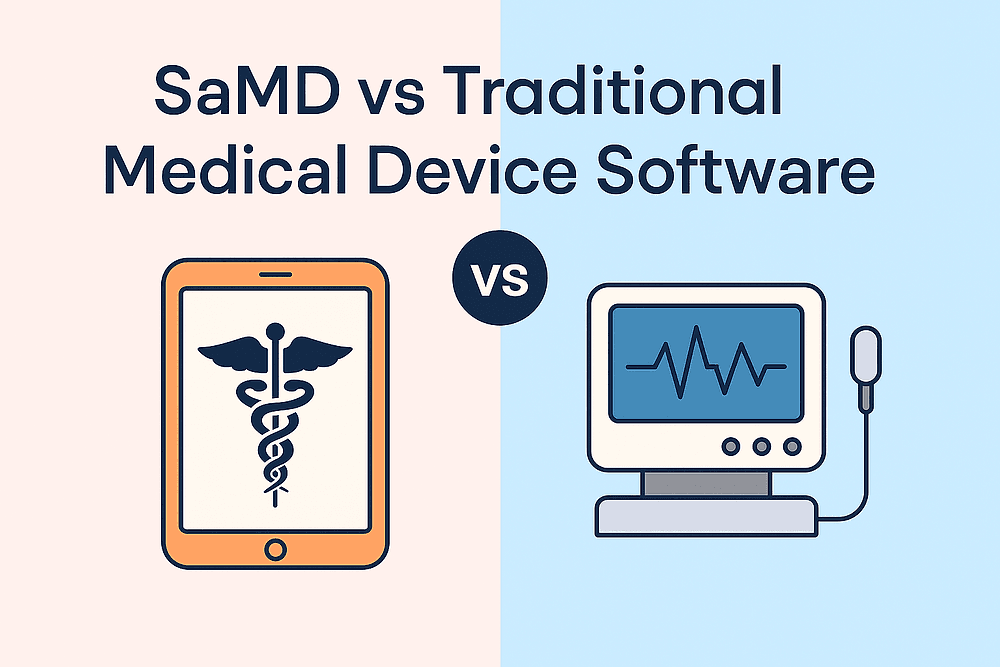
SaMD (Software as a Medical Device) is software with a medical intended use that works independently of device hardware. SiMD (Software in a Medical Device) is software in or for a hardware medical device (e.g., control/firmware/UI). This distinction affects pathway (predicate/De Novo/PMA), evidence (SaMD adds VCA/AV/CV), and docs (both follow DSF content, IEC 62304, and ISO 14971).
SaMD vs Traditional Medical Device Software
Aspect
SaMD
Traditional Medical Device Software
Definition
Software that IS the medical device
Software that's PART OF a medical device
Hardware
Runs on smartphones, tablets, computers
Integrated with specific medical hardware
FDA Path
Independent device classification
Part of overall device submission
Distribution
App stores, cloud platforms
Embedded in physical device
Updates
Over-the-air software updates
Often requires device service
Examples
ECG analysis app, AI diagnostic tool
MRI software, ventilator controls
What is SaMD (Software as Medical Device)?
SaMD is software intended for medical purposes that performs these purposes without being part of a hardware medical device.
Think mobile apps, cloud platforms, or desktop software that diagnose, treat, or monitor patients.
Key SaMDCharacteristics
Platform Independence
- Runs on general-purpose devices (phones, tablets, computers)
- No specialized medical hardware required
- Distributed through app stores or web platforms
Medical Function
- Diagnoses disease or conditions
- Prevents, monitors, or treats disease
- Calculates drug dosages or treatment plans
Real SaMD Examples
High-Risk SaMD
- AI software that detects cancer in medical images
- Apps that interpret ECGs for heart conditions
- Software that calculates insulin dosing
Lower-Risk SaMD
- Apps that track symptoms for doctor review
- Software that reminds patients to take medication
- Platforms that store and organize health records
What is Traditional Medical Device Software?
Traditional medical device software (also called Software in Medical Device or SiMD) is software that's built into a hardware medical device and can't function without it.
Key Traditional Software Characteristics
Hardware Dependency
- Requires specific medical device hardware
- Often embedded or integrated into the device
- Cannot run on general-purpose computers
Device Integration
- Controls device functions and operations
- Processes data from medical sensors
- Manages device safety and alarms
Real Traditional Software Examples
Hospital Equipment
- MRI software that controls imaging and reconstruction
- Ventilator software managing breathing parameters
- Surgical robot software enabling precise movements
Implantable Devices
- Pacemaker firmware controlling heart rhythm
- Insulin pump software managing glucose delivery
- Cochlear implant software processing sound
Critical Regulatory Differences
FDAClassificationApproach
SaMD Gets Its Own Classification
- Classified as Class I, II, or III based on risk
- Uses IMDRF framework (Categories I-IV)
- Risk depends on healthcare situation and decision type
Traditional Software Follows Device Classification
- Software risk assessed as part of overall device
- Classification depends on complete device system
- Software documentation part of device submission
Regulatory Pathways Breakdown
SaMD Pathways
- 510(k) Clearance: Most of SaMD submissions
- De Novo: For novel SaMD without predicates
- PMA: Class III SaMD requiring clinical trials
Traditional Software Pathways
- Follows parent device pathway
- Software validation part of overall device testing
- Timeline depends on device complexity and risk
Development and Documentation Requirements
SaMD Development Must-Haves
Core Standards
- IEC 62304: Medical device software lifecycle
- ISO 14971: Risk management
- ISO 13485: Quality management systems
Key Documentation
- Software Requirements Specification
- Software Architecture and Design
- Risk Management File
- Clinical Evaluation (for higher-risk SaMD)
Most Common Documentation Issues:
- Inadequate risk analysis
- Missing software requirements
- Insufficient cybersecurity documentation
Traditional Software Development
Integrated Approach
- Hardware-software co-design
- Real-time system requirements
- Safety-critical system design
- Electromagnetic compatibility
Documentation Integration
- Part of Device Master Record (DMR)
- Included in Design History File (DHF)
- Integrated risk analysis
- System-level verification and validation
Common FDA Feedback: FDA reviewers frequently request additional information for SaMD submissions, with incomplete software documentation being a leading cause of delays. Proper preparation significantly reduces review time.
Technical Implementation Differences
SaMD Technical Considerations
Multi-Platform Design
- iOS, Android, Windows, macOS compatibility
- Responsive design for different screen sizes
- Cloud connectivity and API integrations
- Cybersecurity for distributed systems
- Secure software development practices
- Vulnerability management programs
- Strong authentication and access controls
- Data encryption and protection
Traditional Software Technical Requirements
Real-Time Performance
- Deterministic response times
- Safety-critical timing constraints
- Hardware interrupt handling
- Reliable operation in medical environments
Hardware Integration
- Medical sensor interfaces
- Actuator and control system integration
- Specialized display and user interfaces
- Device-specific communication protocols
Post-Market and Updates
SaMD Post-Market Management
Software Updates
- Over-the-air updates and patches
- User notification requirements
- Change control documentation
- Version management across platforms
Continuous Monitoring
- Algorithm performance tracking
- Real-world evidence collection
- User experience analytics
- Adverse event reporting
Traditional Software Updates
Device-Integrated Updates
- Often requires on-site service
- Hardware compatibility verification
- Complete system revalidation
- Coordinated with device maintenance
Surveillance Integration
- Software issues reported as device malfunctions
- Field corrective actions for software defects
- Periodic safety updates through device service
Cost and Market Access
SaMD Economics
Development Costs
Based on industry surveys and regulatory consulting firms:
- Initial SaMD development: $150,000 - $800,000
- FDA 510(k) submission fees: $12,745 - $63,725 (depending on company size)
- Clinical validation: $200,000 - $1.2M (required for higher-risk SaMD)
- Annual platform maintenance: $50,000 - $150,000
Market Performance
Industry analysis shows:
- SaMD market experiencing strong growth in recent years
- Faster time-to-market compared to traditional devices
- Increasing adoption of agile development methodologies
Distribution Channels
- Medical app stores (Apple, Google)
- Direct physician portals
- Healthcare system integrations
- Prescription vs. over-the-counter models
Traditional Software Economics
Integrated Development
- Software represents 30-60% of total device cost
- Hardware-software integration adds 20-40% complexity
- Validation integrated into device testing budget
Market Access
- Medical device distributors
- Direct hospital sales
- Capital equipment purchasing
- Long-term service contracts
Making the Right Choice
ChooseSaMDWhen:
- Software can function independently
- Targeting multiple platforms or devices
- Frequent updates or AI/ML improvements needed
- Serving diverse healthcare settings
- Leveraging cloud computing capabilities
ChooseTraditionalWhen:
- Software requires specialized medical hardware
- Real-time performance is critical
- Complex hardware-software integration
- Established device distribution channels
- Safety-critical embedded systems
Common Mistakes to Avoid
SaMD Mistakes
- Underestimating cybersecurity requirements
- Inadequate clinical validation planning
- Poor change control for updates
- Insufficient platform testing
Traditional Software Mistakes
- Separating software and hardware risk analysis
- Inadequate real-time performance validation
- Poor hardware-software interface documentation
- Insufficient system-level testing
Key Takeaways
- Independence is the key differentiator - SaMD works alone, traditional software needs medical hardware
- Regulatory pathways differ significantly - SaMD gets independent classification, traditional follows device path
- Development approaches vary - SaMD focuses on platform compatibility, traditional on hardware integration
- Post-market obligations differ - SaMD enables rapid updates, traditional requires device-level changes
- Market access strategies are distinct - SaMD uses digital channels, traditional follows device distribution
Understanding these differences is crucial for regulatory strategy, development planning, and successful market entry. Whether building SaMD or traditional medical device software, the choice impacts everything from team composition to regulatory timeline.
Next Steps
Ready to navigate medical device software regulation? Complizen AI streamlines both SaMD and traditional software compliance with:
- Automated documentation generation
- Real-time regulatory guidance
- AI-powered submission preparation
The Fastest Path to Market
No more guesswork. Move from research to a defendable FDA strategy, faster. Backed by FDA sources. Teams report 12 hours saved weekly.
Frequently Asked Questions
Q: Can software be both SaMD and traditional medical device software?
A: No. Software is classified as either SaMD (independent medical device) or traditional medical device software (part of a hardware device). According to FDA guidance document "Software as Medical Device (SaMD): Clinical Evaluation", the distinction is based on independence from specialized medical hardware.
Q: Do all SaMD products need clinical studies?
A: Not all. Many SaMD clearances rely on analytical validation alone. Clinical studies are typically required for Class III SaMD or Class II SaMD that diagnose critical conditions.
Q: How long does SaMD FDA approval typically take?
- 510(k) clearance: ~90 days average (standard review)
- De Novo classification: ~150-200 days average
- PMA approval: varies significantly based on complexity
Q: What's the biggest regulatory risk for SaMD companies?
A: Cybersecurity compliance. The FDA's 2023 cybersecurity guidance requires comprehensive security documentation, and cybersecurity deficiencies are increasingly common in Additional Information requests.
Need help determining if your software qualifies as SaMD? Our regulatory experts provide free initial consultations to help clarify your pathway.